
Plitvice Lakes National Park map
canvas, see more
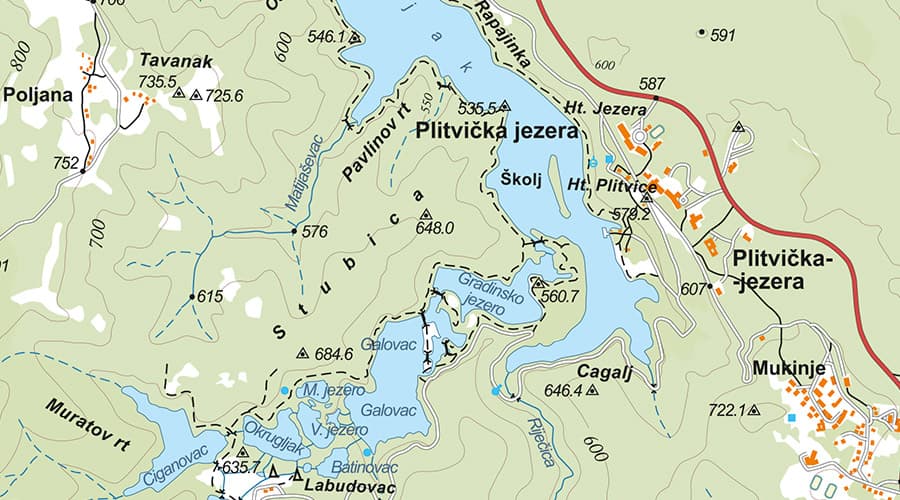
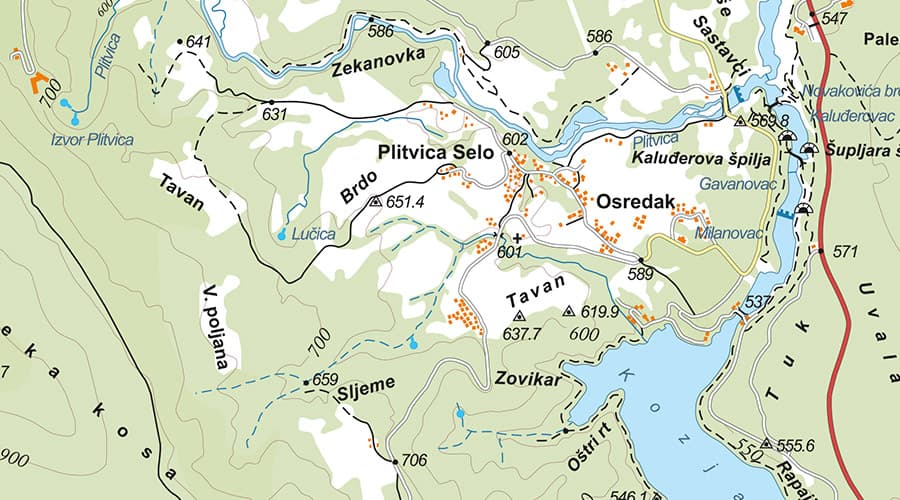
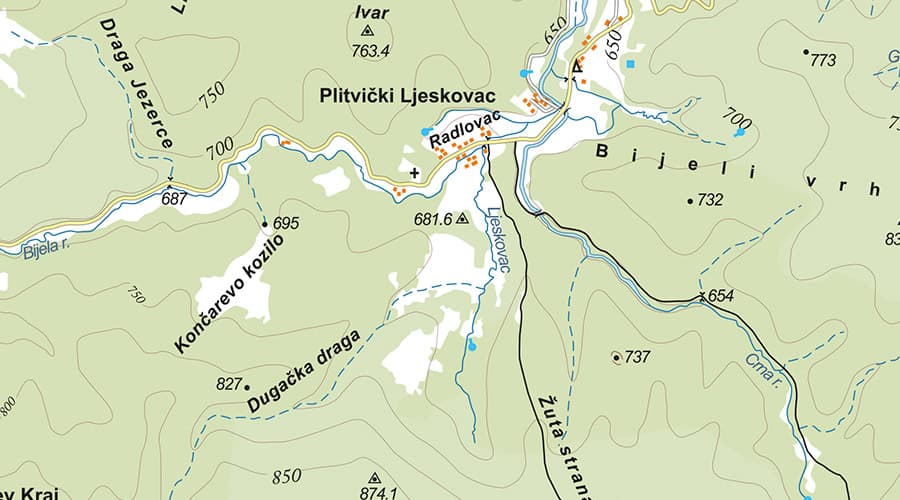
Plitvice Lakes National Park map drawn based on a lifelong commitment to education and the arts. Get inspired to travel more and mark the places you've been to share your adventure stories!
Plitvice Lakes National Park is a unique geological and hydrogeological karst phenomenon. As the oldest, largest and most visited Croatian national park, Plitvice Lakes was among the first in the world to be included on the UNESCO World Heritage List. The Plitvice Lakes complex was declared a national park on April 8, 1949. It is the largest, oldest and most visited Croatian national park. Plitvice Lakes, a group of 16 larger and many smaller, interconnected lakes between Mala Kapela and Plješevica, in the headwaters of the Korana River; covering 1.98 km². They stretch in a south-north direction for a length of 8 km. The lakes receive their water from numerous rivers and streams, and are interconnected by cascades and waterfalls.
The upper lakes are: Prošćansko Lake, Ciginovac, Okrugljak, Batinovac, Veliko Jezero, Malo Jezero, Vir, Galovac, Milino Jezero, Gradinsko Jezero, Veliki Burgeti and Kozjak. The lower lakes are: Milanovac, Gavanovac, Kaluđerovac and Novakovića Brod. Due to the deposition of tufa, the lakes are constantly changing. The two largest lakes, Prošćansko Lake and Kozjak, cover about 80 percent of the total surface area of the water body. These lakes are also the deepest, with depths of 37 and 47 m. No other lake in the park exceeds 25 m in depth. The preservation of old customs and traditions is of great importance to the local population. Local culture is also recognized as an important factor for tourism. In terms of architecture, Lika is known for its low wooden houses with roofs made of rye straw or shingles. Many features of the ancient way of life are reflected in local costumes. They say a lot about the regional affiliation or social status of those who wore these costumes.
When we look for what's best in the person we happen to be with at the moment, we're doing what God does, so in appreciating our neighbor, we're participating in something truly sacred.
A great deal of the capability of an army is its dedication to its cause and its will to fight. You can have the best equipment in the world, you can have the largest numbers in the world, but, if you're not dedicated to your cause, if you don't have the will to fight, then, you are not going to have a very good army.